NEED TO KNOW
Four masked men stole three paintings worth over $10 million from the Magnani Rocca Foundation in Italy between on March 22
The heist lasted three minutes and the group escaped by climbing a fence, according to reports
Italy's national police force, the Carabinieri, is investigating the incident and analyzing surveillance footage from the museum
Thieves have stolen three paintings worth millions of dollars during a heist at a museum in Italy, according to reports.
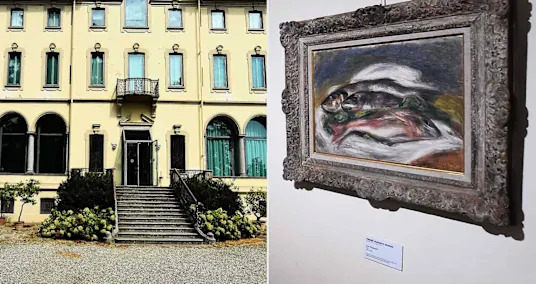
Four masked men entered the Magnani Rocca Foundation villa, located in Parma, on March 22 and took Les Poissons by Pierre-Auguste Renoir, Still Life with Cherries by Paul Cézanne and Odalisque on the Terrace by Henri Matisse, according to Rome-based outlet Il Messaggero and the BBC.
The criminals were able to force access into the entrance door and gain entry to a room on the first floor before running off with the paintings via the museum’s gardens, all in three minutes, according to Il Messaggero and broadcaster Sky TG24, per The Guardian.

Credit: Alamy
Never miss a story — sign up for PEOPLE's free daily newsletter to stay up-to-date on the best of what PEOPLE has to offer, from celebrity news to compelling human interest stories.
They escaped the area by climbing over a fence, according to local public broadcaster TGR, per the BBC.
The gang allegedly "intended" to steal an unknown fourth painting, but triggered the alarm system and were forced to abandon it during their getaway, according to Il Messaggero.
The outlet reported that the Magnani Rocca Foundation said the operation was "extremely rapid and planned" and allegedly required “precise and coordinated organization”.
The museum said the crime allegedly involved "a clearly planned functional division of the serious unlawful conduct, which, however, was not completed due to the activation of protection systems and thanks to the prompt intervention of internal security, the Carabinieri, and the security institute, to whom we extend our most sincere thanks for their courage and promptness," according to Italian news agency ANSA.
The BBC said the cost of the paintings was worth a combined total of €9 million (around $10.3 million). The cost of Les Poissons alone is reportedly worth €6 million (around $6.9 million).

Credit: Roberto Serra - Iguana Press/Getty
Italy’s national police force, the Carabinieri, is investigating the incident with the support of the Cultural Heritage Protection Unit of Bologna — a unit that specializes in the protection of cultural heritage, per the BBC.
They are reviewing and analyzing video surveillance from the heist. News about the stolen paintings was only made public on Sunday, March 29, according to the outlet.
The Magnani Rocca Foundation was founded in 1977 by critic Luigi Magnani and features masterpieces by iconic artists such as Titian, Goya, Morandi and Monet.
The Carabinieri and The Magnani Rocca Foundation did not immediately respond to PEOPLE's request for comment.
Read the original article on People
LATEST POSTS
- 1
 ‘Democratizing space’ is more than just adding new players – it comes with questions around sustainability and sovereignty
 - 2Novartis eyes more bolt-on acquisitions, CEO says
- 3Putting resources into Yourself: Self-awareness Techniques
- 4The Most Compelling Books of the 10 years
- 5Collection of 7,000-year-old ostrich eggs discovered under sand dunes in southern Israel



- Step by step instructions to Protect Your Retirement with Senior Protection.
- Instructions to Investigate Different Open Record Extra Offers Actually
- Step by step instructions to Recognize the Distinction Between Lab Jewels and Precious stone Simulants
- Uranus's small moons are dark, red, and water-poor
- German foreign minister backs abandoning EU's unanimity principle
- Pick Your Number one breakfast food
- The World's Dazzling Regular Miracles
- Winter storms blanket the East, while the U.S. West is wondering: Where’s the snow?
- What will happen if Artemis 2 astronauts get hit by a solar storm during NASA's ambitious moon mission?