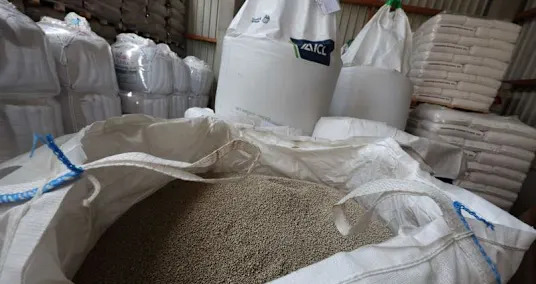

The war in Iran has resulted in a 30-40% spike in the cost of mineral fertilizer since the start of the year, threatening international food prices, according to German experts.
"World market prices for nitrogen fertilizer are increasingly approaching the peak levels we saw at the start of Russia's war against Ukraine [in February 2022]," said Philipp Spinne, managing director of the German Raiffeisen Association (DRV).
In Europe, however, consumers have not yet directly felt the effects because many farmers had already purchased their spring fertilizer before the Iran war began, the Bavarian Farmers' Association told dpa.
But should the war drag on, production costs in Germany and other countries are likely to rise, and with them, producer prices, it warned.
Four years ago, the threat to global food security feared by some experts did not materialize.
This was partly because Russia – a leading fertilizer producer – benefited from the invasion of its neighbour and actually increased its fertilizer exports.
The European Union has since gradually introduced tariff increases on Russian nitrogen fertilizers.
High energy prices are primarily driving the pricing spike, with gas prices accounting for up to 90% of the costs of ammonia and nitrogen production, said Germany's Agrar industry association.
Therefore, if gas becomes more expensive, fertilizer prices automatically rise. But if farmers use less fertilizer, crop yields suffer as a result.
LATEST POSTS





 Ifo: Job cuts in Germany slowing but not enough for a turnaround
- Mosquitoes carrying malaria are evolving more quickly than insecticides can kill them – researchers pinpoint how
- Unwinding the Starting points of America: An Excursion Through History
- Old photos misrepresented as aftermath of political party supporters' brawl in Bangladesh
- The Iconic, Instantly Recognizable Plastic Chair That's Known All Around The World
- Instructions to Upgrade the Mechanical Highlights of Your Shrewd Bed for a Superior Night's Rest
- The most effective method to Alter Your Savvy Bed for A definitive Rest Insight
- The Best Competitors of the 21st Hundred years
- Which '80s Film Actually Holds Up Today?