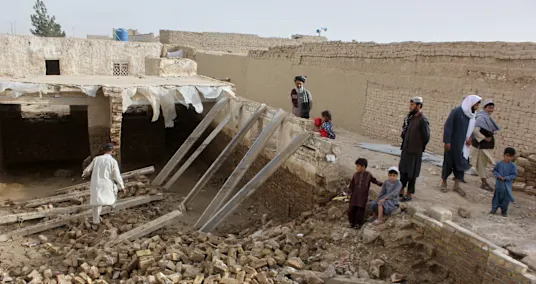
Heavy rain that has caused severe flooding and landslides has killed at least 45 people in Afghanistan and Pakistan over the past five days, authorities say.
Afghanistan’s National Disaster Management Authority (ANDMA) said on Monday that 28 people have been killed in the floods and 49 injured with more than 100 homes destroyed.
Most of the deaths in Afghanistan were reported in central and eastern provinces, including Parwan, Maidan Wardak, Daikundi and Logar, according to ANDMA.
The authority added in a statement that weather conditions remained “unstable” in parts of the country and there is a continued risk of more rain and flooding in some areas.
“In total, 1,140 families have been affected,” ANDMA said.
Police spokesperson Sediqullah Seddiqi told the AFP news agency a 14-year-old boy died after being struck by lightning in the northwestern province of Badghis.
He added that in the same province, three people had drowned while trying to gather driftwood to be used for heating.
At the same time in Pakistan’s Khyber Pakhtunkhwa province, which shares a border with Afghanistan, 17 people were killed and 56 wounded, the Provincial Disaster Management Authority said.

Extreme weather
Heavy rainfall has continued to sweep across Afghanistan since Thursday, causing floods and landslides in multiple provinces.
The weather prompted the closure of several highways, according to officials in central and eastern Afghanistan. Further rains and storms are forecast for Tuesday.
Afghanistan’s National Disaster Management Authority has warned citizens to refrain from using “rivers and flooded streams, and follow the weather forecast seriously”.
In the central province of Daikundi, the local disaster management department said a five-year-old was killed when a roof collapsed. A woman was also killed in the same circumstances in the eastern province of Nangarhar, police spokesperson Sayed Tayeb Hamad said.
Afghanistan is vulnerable to extreme weather, particularly heavy rainfall and monsoon seasons, which trigger floods and landslides in remote areas with fragile infrastructure.
In January, flash floods and snowfall caused the deaths of at least 17 people and killed livestock.
LATEST POSTS
- 1
 Solid Propensities: Little Changes for a Superior Life
 - 2Peloton recalls more than 800,000 bikes after broken seat posts injure users
- 3Instructions to Pick the Right Toothpaste for Your Dental Requirements
- 4Ringleader of suspected human trafficking network arrested in Ethiopia
- 5When a sperm whale gives birth, the mother gets help from her friends




- Zelensky names spy chief to head presidential office after corruption row
- Activists Took BMW and Mercedes to Court Over Gas Cars. It Didn’t Stick
- Trump signs a law returning whole milk to school lunches
- Smooth out Your Funds: Cash The board Simplified
- Don't plan to cook on Thanksgiving? Here are the restaurants and fast food places that are scheduled to be open
- Hidden Island Cameras Capture Rare Tasmanian Species for the First Time Ever
- Watch Chinese astronauts enjoy '1st ever space BBQ' from Tiangong's brand-new oven (video)
- Farewell, comet 3I/ATLAS! Interstellar visitor heads for the outer solar system after its closest approach to Earth
- Palestinians forced from West Bank refugee camps left in limbo as Israeli demolitions go on